
Auto Repair
Smooth Operator (Shocks and Struts)
Few of us ever drive somewhere without encountering some pretty rough roads, and it’s amazing how well our vehicles are able to smooth out the ride. Thank your shocks and struts.

Few of us ever drive somewhere without encountering some pretty rough roads, and it’s amazing how well our vehicles are able to smooth out the ride. Thank your shocks and struts.
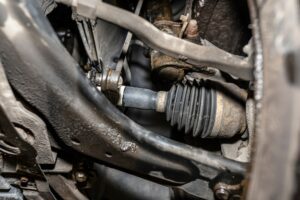
If you have a front-wheel-drive vehicle, it has components called CV joints which enable you to turn your wheels smoothly. The CV stands for “constant velocity.” In essence, it’s a set of gears that connect a shaft that allows power from the transmission to be sent to the wheels. When you turn the wheels, no matter what angle, the input velocity rotation will be equal to the output. Thus, the name, CV (constant velocity) joint. Other vehicles with 4-wheel drive and all-wheel drive also use CV joints.
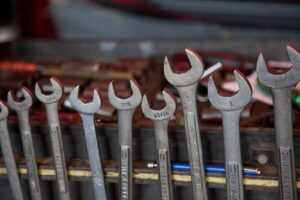
A clean connection is a wonderful thing. Think of a good cell phone signal or an airline connection with ample time and short distance to the next gate. Good connections are also important for your vehicle’s battery, and one secret to that is to make sure it’s periodically cleaned.
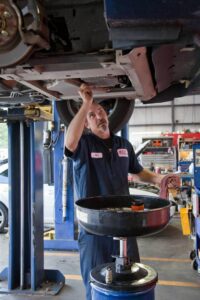
If you own a newer vehicle, your vehicle’s manufacturer may require that it use synthetic oil instead of conventional oil. Synthetic oils are more stable, don’t break down as easily, and provide better engine protection than conventional oil. All those things can prolong the life of your engine and help it run better.
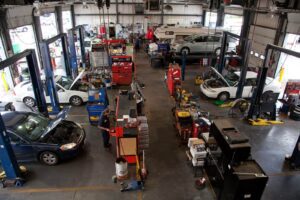
Think of how many times you put your foot on your vehicle’s brake pedal every day. And think of how much you rely on your brakes to slow down and stop your momentum. When it comes to safety systems, your brakes are at the top of the list, and that’s why it’s so important to keep them in top condition. Brakes are something you make sure you keep maintained before they start showing signs of problems.

As your vehicle ages, its performance isn’t quite what it used to be, but many of us never notice the change because it’s gradual. So here are a few questions to ask yourself. Does your vehicle feel like it doesn’t have the pep that it used to? Have you noticed your fuel economy isn’t quite as good as it once was? Does it idle roughly or is it hard to start? Do you hear the engine knocking? Has it recently failed an emissions test?

The internal combustion engine in your vehicle counts on two things that mix together to be burned in the engine for power: fuel and air. Both are important, of course. If you run out of fuel, your engine won’t run at all. Since there’s plenty of air around, you won’t run out of air, but you could feel your vehicle’s performance suffer if the engine air filter starts to get clogged.

Talk about exquisite choreography; it happens under the hood of your vehicle every time you take a drive. Your engine’s many complex parts must work exactly together. One key is a part called a timing belt, which enables the synchronizing of two of your engine’s components, the camshaft, and the crankshaft.
Ever wonder how your vehicle is able to move over bumps, potholes and other irregularities in the road and you hardly feel a vibration in the cabin? It’s your shocks and struts doing the hard work along with the rest of your suspension and tires. They keep the ride smooth and are important for your vehicle’s safe operation.